Technical Debt: The Silent Tax on Every Growing Product
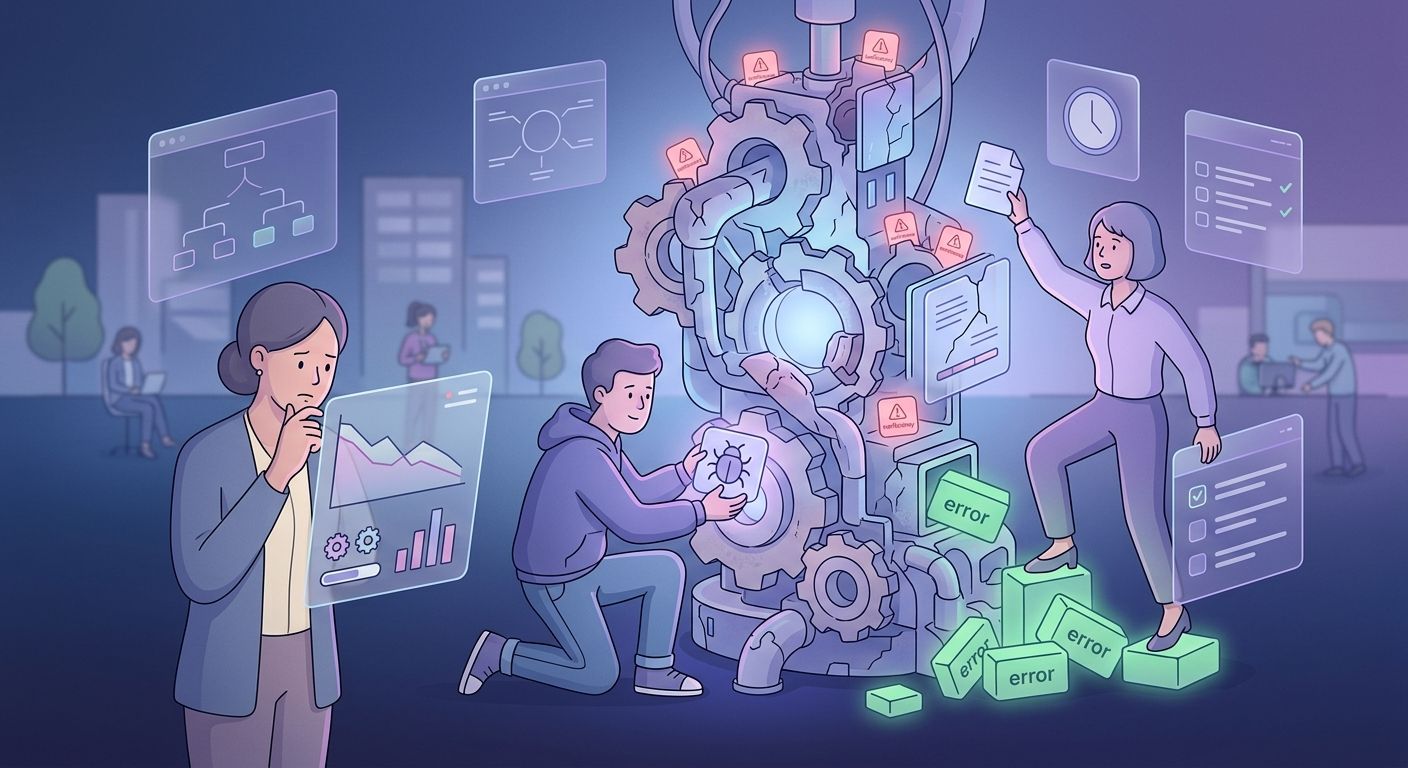
Technical Debt: The Silent Tax on Every Growing Product
A feature that took three days to build when a product was new can eventually take several weeks. The team is larger, the product has more users, and there are more requirements, but growth is not always the only reason development becomes slower.
Over time, software accumulates technical debt. Some of it comes from shortcuts taken to meet deadlines. Some comes from decisions that made sense when the product was smaller but no longer fit the way it works today. Others come from requirements that changed after the software was already built.
The important thing is that technical debt usually does not cause an immediate problem. The application continues working while the cost quietly appears in future development.
What Is Technical Debt?
Technical debt is the future cost created when a team chooses a simpler or faster technical solution instead of a more sustainable one.
That does not automatically make the decision wrong. A startup may intentionally build a simple version of a product to test whether customers actually want it. Spending months designing a highly scalable system before validating the idea may be a much worse use of time.
The problem comes when temporary decisions become permanent. If the product continues growing on top of those shortcuts, every new feature has to work around them.
Technical debt is therefore less about having "bad code" and more about carrying old technical decisions into a product that has changed.
How Does Technical Debt Accumulate?
Most technical debt is not created by one major mistake. It builds through ordinary development decisions.
A developer hard-codes something because the requirement seems unlikely to change. A team postpones a refactor because an important release is approaching. A system is designed around a business rule that later turns out to be wrong.
Each decision may be reasonable at the time. The problem appears when the product keeps changing while those decisions remain untouched.
Eventually, developers have to understand more dependencies before making even small changes. Something that used to be straightforward now requires checking several parts of the system to make sure nothing else breaks.
The debt has become part of the product.
Why It Gets Worse as Products Grow
Software becomes harder to change as more features and dependencies are added.
Consider a notification system that was originally built only for email. At the time, that might have been exactly what the product needed. Later, the business wants to add SMS, push notifications, and other channels.
The original implementation may still work perfectly. The problem is that it was designed around an assumption that is no longer true.
Now developers have to work around that original decision every time they expand the system. The shortcut that saved time early in the product's life has become an obstacle to future development.
This is why technical debt becomes increasingly noticeable as a product grows. New features are not being built on an empty foundation. They are being built on everything that came before them.
The Cost Isn't Just Technical
Technical debt eventually affects the business.
When a codebase becomes difficult to change, new features take longer to deliver. Product experiments become more expensive. Developers spend more time investigating existing behavior before making changes, and teams become more cautious about touching older parts of the system.
This can influence product decisions.
A business might stop pursuing a useful feature because it would require too much engineering work. A product team might delay an improvement because the technical risk is too high. Eventually, the limitations of the software start limiting the options available to the business.
That is when technical debt becomes more than an engineering concern.
Should You Fix Every Piece of Technical Debt?
No. Trying to eliminate every piece of technical debt would be impractical and could slow development unnecessarily.
The better approach is to prioritize debt based on the cost it creates. A messy piece of code that nobody touches may not matter very much. A poorly designed component that makes every new feature slower is a different story.
Repeated friction is a useful signal. If developers keep encountering the same problem, if changes regularly require workarounds, or if a particular part of the system frequently causes bugs, it may be worth investing in.
Technical debt should be treated like any other engineering trade-off. The question is not whether the code is perfect. The question is whether the current solution is creating enough cost to justify improving it.
Pay It Down Before It Becomes a Crisis
One of the biggest mistakes teams make is assuming they can always deal with technical debt later.
Sometimes they can. Early-stage products especially need to move quickly and learn what users actually want before investing heavily in architecture.
But once the product has validated its direction and continues to grow, technical debt needs more attention. Features built on top of old shortcuts make those shortcuts harder to remove, and eventually the cost of changing the system can become much larger than it would have been earlier.
This is why good teams keep an eye on the health of the software while continuing to build new features. They do not stop development every time they find something that could be improved. They simply make sure important technical problems do not become invisible.
Build for Change, Not Prediction
Good software architecture is not about predicting exactly what the product will look like five years from now. Nobody can do that reliably.
It is about avoiding unnecessary constraints and making important decisions deliberately.
Before building a system, teams should understand the business requirements and identify which parts are likely to change. During development, they should recognize when a shortcut is temporary and keep track of the areas that may eventually need improvement.
The goal is not to create software that never needs maintenance. Every successful product changes.
The goal is to make those changes possible without fighting the architecture every time.
Final Thoughts
Technical debt is an unavoidable part of software development. Teams work with deadlines, limited resources, changing requirements, and incomplete information, so not every technical decision will be perfect.
The real danger is allowing those decisions to disappear from view.
When technical debt is visible, teams can decide when it is worth addressing. When it remains hidden, its cost simply gets added to future development until the product becomes increasingly difficult to change.
A growing product needs more than new features. It needs a technical foundation that can support those features without turning every change into a major engineering project.
Good software development is not about avoiding every shortcut.
It is about knowing which shortcuts you can afford to keep.
Build Software That Can Grow With Your Business
At DevStudio, we believe software should support the way a business grows rather than become a limitation as that growth happens. That starts with understanding the business, making deliberate technical decisions, and building systems that can evolve as requirements change.
Whether you're starting a new product or dealing with software that has become difficult to maintain, the right solution is not always a complete rewrite. Sometimes it means identifying where the existing system is creating the most friction and improving those areas first.
DevStudio helps businesses design, build, and improve software with long-term growth in mind.