Software Maintenance: The Phase Every Business Forgets to Budget For
Software Maintenance: The Phase Every Business Forgets to Budget For
Launching a new software application feels like crossing the finish line of a long marathon. Months of planning, design work, and software engineering finally culminate in a product live in the marketplace.
However, business leaders often fall into a costly trap right after launch. They treat software development like constructing a physical building, assuming that once the initial build is complete, the financial investment drops to zero.
Software is not a static physical structure. It is an active ecosystem operating inside a rapidly changing digital environment. Budgeting only for the initial launch leaves your application vulnerable to performance degradation, security breaches, and rapid obsolescence.
The Reality of Post-Launch Software Dynamics
Every custom application relies on an interconnected network of third-party services, cloud servers, mobile operating systems, and external programming libraries. None of these underlying components remain static.
Apple and Google continuously update their mobile operating systems throughout the year. Cloud infrastructure providers roll out structural security updates, and external service platforms periodically update their communication protocols.
First, your initial launch brings the application live to users. Second, environmental updates across operating systems require proactive code adjustments. Third, routine security patches protect user data. Finally, continuous feature improvements ensure sustained long-term returns on your investment.
When those underlying environments update, code that functioned perfectly yesterday can suddenly break today. Software maintenance is the active practice of keeping your code aligned with the evolving technology landscape surrounding it.
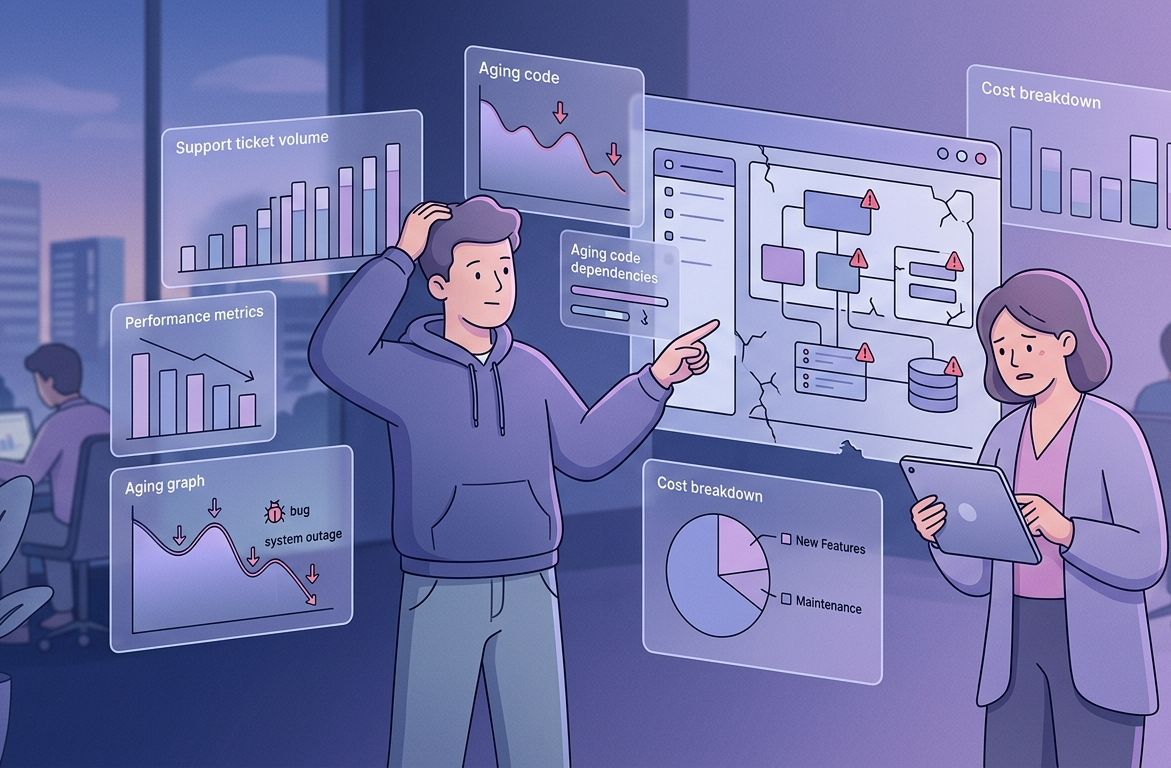
Without ongoing maintenance, an application suffers from natural code decay. Performance slows down, security vulnerabilities emerge, and small bugs slowly undermine the trust you worked so hard to build with your users.
The Core Pillars of Comprehensive Maintenance
Proper post-launch budgeting requires understanding where continuous engineering effort actually goes. Maintenance falls into four distinct operational categories that keep applications healthy.
1. Security Patching and Compliance
Cyber threats evolve constantly, and new vulnerabilities are discovered in software frameworks every single day. Security maintenance involves proactively applying security patches, updating server configurations, and protecting user data against fresh security risks.
Failing to budget for routine security updates leaves your business exposed to data leaks and system outages. Remediating a breach after it happens costs far more than maintaining basic defensive protocols on a monthly basis.
2. Infrastructure Monitoring and Optimization
As your user base grows, your server infrastructure experiences varying levels of traffic, data storage demands, and memory usage. Continuous monitoring ensures your database queries stay fast and your application scales smoothly during peak usage.
Proactive optimization prevents sudden server crashes and keeps load times low. High-performing companies monitor system health around the clock so performance bottlenecks can be fixed before end users ever notice a delay.
3. Adaptive Maintenance and Environment Updates
Operating systems, web browsers, and integration software update constantly. Adaptive maintenance ensures your platform retains full functionality whenever modern device software or third-party platforms update their standards.
For example, if your application processes payments through an external provider, that provider will periodically update its technical protocols. Your engineering team must update your integration code to keep transactions flowing without interruption.
4. Continuous Feature Refinement and User Feedback
Post-launch user behavior rarely matches early business assumptions with absolute precision. Real users quickly reveal which features provide high value, which screens cause confusion, and where new capabilities are needed.
Refining existing features based on real user analytics keeps your application competitive and engaging. Ongoing development allows you to release small, steady improvements that increase long-term user retention.
Aligning Engineering Practice with Business Value
The psychological shift from treating software as a one-time expense to viewing it as a continuous operational engine changes how companies make long-term technology decisions.
From an engineering perspective, neglected applications accumulate technical debt rapidly. Technical debt represents the cumulative cost of quick fixes, postponed updates, and outdated framework choices that make future software changes exponentially harder and more expensive.
Addressing code quality incrementally through monthly maintenance keeps your digital product clean, flexible, and easy to upgrade. It allows your business to respond quickly to new market opportunities instead of rebuilding broken foundation code from scratch every few years.
Budgeting for continuous care turns software from a fragile short-term project into a resilient long-term asset. It ensures your digital platform grows predictably alongside your business objectives.
Common Budgeting Traps in Software Development
Avoiding financial surprises after launch requires identifying common planning mistakes early in the project lifecycle:
- Allocating 100% of the budget to initial launch: Expending your entire engineering budget on the initial build leaves zero resources for critical post-launch adjustments and bug fixes.
- Confusing web hosting with application maintenance: Server hosting only pays for digital infrastructure space. It does not cover security patching, code updates, or database optimizations.
- Delaying updates until critical failures occur: Postponing basic maintenance forces developers to perform emergency fixes under pressure, which costs significantly more than routine care.
Key Takeaways
- Software is an ongoing operational asset: Launching a product is the beginning of its lifecycle, requiring continuous attention to maintain high performance.
- External environments change constantly: Operating system updates and framework upgrades require regular code maintenance to prevent system breakage.
- Proactive security protects capital: Regular security patching shields your business from costly data breaches and unexpected system downtime.
- Prevent technical debt early: Consistent monthly code maintenance keeps application architecture clean and reduces the long-term cost of adding new features.
- Budget predictably post-launch: Allocate a steady monthly percentage of your initial development investment for continuous support, monitoring, and updates.
Build and Maintain High-Performing Software with DevStudio
Creating successful digital products requires more than just launching initial code. It demands a dedicated engineering partner focused on long-term stability, scalability, and performance. At DevStudio, we design, build, and maintain custom software systems built to thrive in complex, evolving technical environments. Partner with the engineering team at DevStudio to secure your software investment and keep your digital operations running smoothly.